Single Question Interview: John Goodrich

Lovecraft, Poe or somewhere in-between?

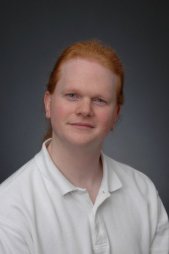
12168_101287046561720_1417119_n

I lean more towards Lovecraft than Poe, although Poe had a broader range, Lovecraft’s ability to imagine and then describe the completely alien wins him over for me.

That said, I wrote a piece for “Beyond the Mountains of Madness” that linked “The Narrative of A. Gordon Pym” with “At the Mountains of Madness.” Pasticing one author is difficult, but trying to somehow merge the two different writing styles was an insane headache. But the adventure won an award, so I guess I didn’t do too terribly.

***You can find out more about John through his  WEBSITE.

(Want to take part in a single question interview? Contact me for your question.)

Single Question Interview: Jessica McHugh

Write for fun or for fans?

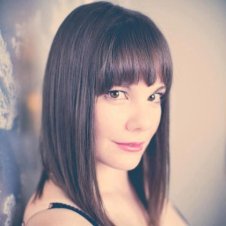
50f790b7e02d0ad8976f41.L._V373748367_SY470_

I see two potential interpretations of this question, so I’ll answer both.

First, if we’re talking about crafting my story based on my own desires or what I think my fans will like, it’s a mixed bag. I never write a story with the desire to please anyone but me. But during editing, when I can see the story as a whole and put myself in the reader’s shoes, I might tweak certain things. More often than not, I choose to surprise rather than satisfy in what the reader thinks he/she wants. Without giving too much way about my novel “The Sky: The World,” I had the opportunity to make an obvious love connection at the end of the book. But based upon the character development I’d set in place, a love connection didn’t feel right. I’ve had a few people say they’d wished the characters had ended up together, but I think in subsequent readings, they saw how that would’ve been an illogical conclusion based on the character’s personalities. I’m not going to smash two people into a relationship because it’s the easy/fashionable/sweet thing to do. But if I see a proper way to give readers what they want, I’m more than happy to oblige. After all, a disappointed reader can be a dangerous thing.

Second, I absolutely write for fun. I wouldn’t take on such a hard career path if I didn’t derive enjoyment from it. However, I also want to make a living as a writer. I want people to read and enjoy my work. I would still do it if I didn’t have/want fans, but I wouldn’t work as hard as I do. With 7 active projects and 12 on the backburner, it’s surprising I haven’t gone off the deep end yet. I guess all of the fun I have in fiction is my life raft.

***You can pick up Jessica’s books through AMAZON.

(Want to take part in a single question interview? Contact me for your question.)

Single Question Interview: Vincenzo Bilof

Zombies, slow or fast or otherwise?

303565_357403994342974_1498446823_n

The concept of a zombie should not be defined by stifling conventions; monsters are born in nightmares. If a zombie is an “unreal” composite of death and humanity, an author’s vision of terror might imbue the monster with other details. What are the limitations of a zombie that can run? How fast can it run, and for how long? Why is a zombie moving slowly? Why does it groan? If we can acknowledge that horror includes a fear of the unknown, why should fear be defined? What is left to fear if all conventions have crafted a monster we know? If we suggest that convention dictates the monster, than we suggest the monster itself does not inspire dread. The zombie itself is not the only source of fear. The characterization of the zombie should be used by the artist at will; restrictions hinder genre, story, and innovation.

***You can pick up Vincenzo’s books through AMAZON.

(Want to take part in a single question interview? Contact me for your question.)

Single Question Interview: Joe R. Lansdale

What scares Joe?

220px-Joe_lansdale_2007

When I was a kid I don’t remember being particularly scared of the dark or what was under the bed, anything like that. I got delicious scares from stories and movies and certain TV shows, and sometimes an after event sort of creep. That said, I never really was an overly frightened child. My imagination could conjure up some serious boogers, but this was all delightful stuff and it passed in a kind of warm haze, like a hot bath going cold. I loved it. But what really scared me, what made me nervous, what truly frightened me were true life events. I remember the Boston Strangler, and wondering how far Boston was from where we lived in East Texas. Quite far, actually, but the idea of this guy was terrifying to me. And Charles Whitman who climbed up in the University Texas tower and rained death and burning hell down on unsuspecting students and teachers and people near the campus really got to me. How could someone do this? IN COLD BLOOD, first the film, and then the book, messed with my head, and I still think about it to these days, and a recent re-reading of it did nothing to soothe those feelings. It’s still dark. Still unsettling, and it was true. For me the fears of the supernatural are, as I said before, a kind of warm chill, if you can imagine such. Something I know isn’t true, and that I can get over quickly. It’s a thrill, not a true terror. Life, wars and disease and early, lingering death, all the things I mentioned before, something terrible happening to a loved one, those are my true fears, not witches and vampires, werewolves and the living dead.

***You can pick up Joe’s books through AMAZON.

(Want to take part in a single question interview? Contact me for your question.)

Single Question Interview: Eric Beebe of Post Mortem Press

What scares Eric?

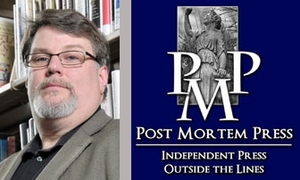
wizardworld_2253_36339945

That’s a tough one. Of course there are the jump scares or startles that you can get from a horror movie, but that’s not really fear, those are more of an unexpected surprise. I can say I have an irrational fear of water and unrestrained heights. The water one is pretty easy to explain, the heights, not so much.

When I was kid I took swimming lessons at our local pool. The first part of the first lesson was to become acclimated to being underwater and holding your breath. How was this accomplished? The teacher forced you underwater until she felt it was time to let you up. Without warning, for what seemed like hours I was forced underwater. The teacher wouldn’t stop until I stopped struggling. That never happened. The next day, my so called friends poked fun at me by dunking me, constantly. At age 8 or 9, this was traumatic. I believe it is also the root of my fear of water. To this day, if I see a water park, I cross to the other side of the street.

Unrestrained heights is an odd one. I can’t really explain it. I love roller coasters. The taller and faster the better. I have no issue with flying either. Yet put me on a ladder, on the roof of a house, or even on a tall bridge, and I start to freak out. I have learned to temper my response some as I have gotten older, but it still is an issue for me. One that’s not as easy to avoid as water.

But these fears or phobia still aren’t the kind of fear that keeps me up at night. I am not haunted by water or heights, more embarrassed than anything I suppose.

Like many people, I suppose my deepest fear is failure. I fear that I failed parents, failed my children, failed my wife, failed my friends, failed myself. That to me, is the ultimate fear. This is something I may or may not have complete control over, and if it goes wrong, it is my own fault. To me, the fear of failure is what keeps me up at night.

***You can pick up POST MORTEM PRESS books through AMAZON and other vendors, or on their  WEBSITE. Most books are also available at various conventions PMP attends annually.

(Want to take part in a single question interview? Contact me for your question.)

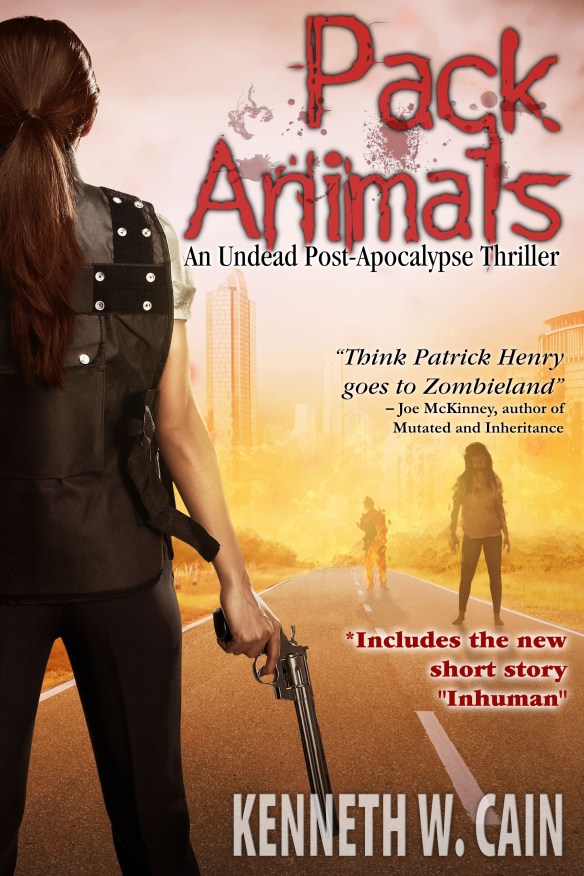
Pack Animals

Pack Animals tagline:
Like a mashup between Blade, The Walking Dead, and Resident Evil.

Where to read this book:

Distressed Press

Post Mortem Press

Out of Print

Post Mortem Press (Original release)

Out of Print

Blurbs:
“Think Patrick Henry goes to Zombieland” — Joe McKinney, author of Mutated and Inheritance

The Next Big Thing

I was tagged for the Next Big Thing promotional blog project by the talented Cynthia Pelayo, whose upcoming book Santa Muerte is worth the read. Check this book out very soon from Post Mortem Press:

The Ten Interview Questions for the Next Big Thing:

Q: What is your working title of your book?
A: CONSTRUCT

Q: Where did the idea come from for the book?
A: This idea perhaps arose from one night spent staring at one of those plastic Easter eggs for too long. It sounds odd, but when you read the story it will make sense.

Q: What genre does your book fall under?
This one will be primarily a science fiction/horror mix, perhaps with a dash of fantasy for seasoning.

Q: Which actors would you choose to play your characters in a movie rendition?
A: You know, I’ve heard a lot of authors who say they have an actor in mind when they create their characters, but my head doesn’t work that way. I think what I see in my mind is more of a conglomeration of people. But if I had to choose, I think I might go with whoever is popular at the moment. Popularity reaps ticket sales.

Q: What is the one-sentence synopsis of your book?
A: When you begin this book, you will think it another zombie book and likely expect the normal run of the mill obstacles, but not everything is always as it seems and this is not a book about zombies.

Q: Will your book be self-published or represented by an agency?
A: I received some interest from an agent when this story was only a few thousands words, so I may try my hand at that.

Q: How long did it take you to write the first draft of your manuscript?
A: I’m halfway through now, but I’ve taken a bit of a hiatus to focus on the third book in THE SAGA OF I and THE DEAD CIVIL WAR. Plus, I’ve been reworking a bunch of shorts for my next collection, which I plan to shop around a bit. I’m sort of clearing the deck to finish this one up, which will likely happen in the early half of 2013. In total, that might end up being a handful of months.

Q: What other books would you compare this story to within your genre?
A: That is a really tough one. I worked really hard at trying to do something different with this one. And while I know that is no easy task, I do think I’ve got something with this story. The first chapter in this book is really misleading and people will think it is all about zombies. Of course they will, because I did when I started to write it. But sometimes your characters take over and they reveal that one little detail, the secret that transforms the story into something completely different. So I’m not sure really, but I suppose I’m fond of THE STAND by Stephen King, so maybe a slight taste of that.

Q: Who or what inspired you to write this book?
A: Too many sleepless nights full of bad dreams, waking up unable to breathe and trying to make the best of it. I write from my heart about my own fears and while my worries may not encompass something as outrageous as this story, elements of those fears are what comprise much of the subplots.

Q: What else about your book might piqué the reader’s interest
A: Hell, if I don’t have you at “This is not a zombie book” when it clearly appears that it is, then I’m not sure what more I can offer you. When you see this book, try it. You just might like it.

I’m a little late to this game and I am supposed to tag five authors to make a similar post. So if you are reading this and would like to take part, then contact me and I will tag you in this post.

~Kenneth W. Cain

2012 Coffin Hop Post

LEAVE A COMMENT ON THIS POST FOR A CHANCE AT
A FREE COPY OF MY DARK FICTION COLLECTION
THESE OLD TALES!

When I was young, far too young to know the harm I could do to myself by watching terrifying movies, I permanently damaged something inside of me. You see, I was not the sort of child who ate well at dinnertime. I am reminded of this daily as I struggle to get my own children to eat their dinners. However, back then, I had a secret agenda.

While other children played Asteroids or with Lincoln Logs before going to bed, I stretched out dinner as long as I could manage. And for good reason. My mother made me sit at the dining room table until I finished everything that was on my plate, knowing I never would. Still she tried. But I waited because I knew at some point my mother would turn the television to the shows I wanted to see. My seat at the table had a direct view of the television.

From the dinner table I watched full episodes of The Twilight Zone, Alfred Hitchcock, One Step Beyond, and many more. At the mere age of four I watched The Omen in its entirety. I filled my curiosity of the things that haunted me to my heart’s delight. And then something broke. One night my mother turned on Psycho and life for me would never be the same.

I know what you’re thinking; “I’ve seen that movie. It’s not that bad.” Well I assure you at 4 or 5 years old it is quite terrifying. In fact, I have never looked at taking a shower the same way. I am thankful for my clear shower stall, no curtain needed to hide the things that might be waiting to stab me. It was such a defining moment in my creepy little life.

You see, it is this emotion I feel when taking a shower that I have become obsessed with. I think all children feel it, and although kids now seem a bit desensitized to it all, it is still there. It hides under their beds or sleeps right outside the window waiting to get in. It’s in their closet calling out their name or in the basement. True horror is always there whether we choose to admit it or not. It waits for us, always there in that brief second where the realization that it does exist finds us. It is then it leaps out, causing us to jump out of our skin.

So why the obsession you ask? Why does one obsess so over lack of sleep? Is it because we desire it so or because we loathe the knowing that we will not find rest? My fascination with horror exists simply because I cannot get these images out of my head. These fears have long haunted me, always waiting around one corner or the next, always terrifying. So it is this constant fear that I examine in my stories, trying to discover the truth behind each horror I have encountered.

Does it work? Some, but not much. I sleep lightly, waking often throughout the night. When we stay at hotels I still peek out around the shower curtain expecting to find Norman Bates, or maybe something worse. I know the Boogeyman rests under my bed, waiting for my eyes to close before he makes himself seen. Ghosts sit at the edge of my bed, hoping I will not wake as they study me. These horrors are part of me and likely always will be. And this is why I write.

Please make sure to click on the banner above and visit all the coffin hoppers. Many of them are giving away prizes including FREE books. If you would like to win a digital copy of my dark fiction collection These Old Tales please leave a comment here on this post. I will randomly select 5 winners and reply to your post for you to email me your contact information if you win. Also, feel free to follow my blog and keep up with future releases.

Thank you for stopping by my website.


11/06/2012 RELEASE!                                         05/05/2013 RELEASE

~Kenneth W. Cain

These Old Tales

These Old Tales tagline:
Fans of classic TV series like The Twilight Zone, The Outer Limits, One Step Beyond, or any similar dark fiction or paranormal series will enjoy this collection of psychological speculative fiction where not everything is always what it seems.

Where to read this book:

Distressed Press

2014 Nominee for Best Short Story Collection at eFestival of Words.

Blurbs:
“It’s always fun to stumble across a writer you haven’t read that has the ‘write stuff.'” — Gene O’Neill, The Burden of Indigo and Operation Rhinoceros Hornbill

From reviews:
“..keeps you guessing right until the end in his anthology These Old Tales – A Collection of Dark Fiction. With each new story, I kept trying to guess the ending, and each time I was wrong.” — Charnel House Reviews

“Cain’s unique eye for the macabre makes this collection more than worth it!” — To The Bone Reviews

“Cain’s skill as a writer is his ability to take mundane things most of us would never notice and turn them into true terror.” — DarkMedia

“The author deftly inhabits the minds of his protagonists, turning each piece into a sharp characterization that resonates long after it’s (usually) morbid conclusion.” — Goodreads Review

Interview with Author/Poet Bruce Boston

Q: I’ve read and enjoyed the poetry on your website, and I see you have won many awards as a poet. Being so successful on that platform, what drives you to long fiction?

BB: Actually, I’ve been publishing fiction, some of it long, for as long as I have poetry. My first novel, Stained Glass Rain, is over 140,000 words. I’ve also published more than a hundred short stories. I’ve always written both fiction and poetry. You can find most of my best stories collected in Masque of Dreams (Wildside Press, 2001, 2009) along with some of my best poetry.

Q: My own poetry suffers, likely due to the constant want to make the piece into a story. What shortcomings and downfalls might one expect to encounter when tackling both poetry and prose?

BB: When you tackle poetry seriously, you are looking at every word choice and every line break. And how they resonate with one another. If your poem starts turning into a story, you can either turn it into a story…write a long narrative poem…or compress it to the point where it works as a short poem, making every word count. You choice depends to some extent on where you feel your talents lie. I’d say that if the ideas and words are flowing for you, go with it, go for the story. If you decide it doesn’t work as a story, it’s generally easier to cut and refine what you’ve already written while you were on a roll than it is to add to it. I’ve had poems that I’ve later expanded to fictions and fictions that I’ve extracted poems from. I’d say there aren’t any shortcomings or downfalls if you take an open approach.

Q. I find this interesting, because the first section of The Guardener’s Tale came off so poetic to me. Was this your intention, or do you think this is merely the voice you were given coming out through your work?

BB: The Guardener’s Tale evolved out of a poem that originally appeared in Amazing Stories in the 80s. You can find the poem reprinted online at Membra Disjecta. The opening section of the novel draws heavily on this poem. Poetic language can enhance fiction if it is used in the right way. Some writers, such as Lawrence Durrell and Nabokov, are good reads for me in part because their language often reads like poetry.

Q. The indiscretion of Tuesdays was brilliant for me. I love the “Don’t ask, don’t tell” concept that allows a society the ability to let loose once a week, as if nurturing the human need to be bad. So, why Tuesdays?

BB: Tuesday is three days from Saturday and three days from Friday, the days when one is most likely to go out with one’s mate. So Tuesday seemed the most logical day to go out alone seeking other liaisons.

Q. I find it interesting, the comparison to a gardener, and their garden–creating a thing of beauty. In your tale, it is no different, except there are a variety of levels to these Guardeners, that in part appears to have something to do with age/experience. Also, the play on the word, using “guard” almost had me picturing storm troopers from Star Wars, but in actuality they are far from such armored monsters. On all levels, they are creating a garden of beauty together. I also found the widespread use of imagery that revolved on flowers in the story. Can you provide some insight into your creation of the Guardener as a social status and job?

BB: If you recall, some of the Guardeners do act like storm troopers when they invade the slum and evict residents from their dwellings. The higher level Guardeners are both police and psychiatrists, or at least with the help of technology they take on the role of psychiatrists. The Future Perfect, the garden of beauty they envision, is only perfect in terms of a society functioning without disruptions of any kind. In other words, a world were everyone has the same values and all serve a productive function within the system. It’s a bit like an insect colony, with no room for individuality or attitudes and ideas that run counter to the norm. Also akin to the ideal state once envisioned by the former Soviet Union. Much of art and literature of the Soviet Union from the 30s through the 50s, known as Socialist Realism, portrayed striving for an ideal communist society. Of course any society has its canon of what is considered acceptable behavior, which includes the content for art and literature. The more totalitarian the state, the more narrowly such a canon is defined. The Guardeners in The Guardener’s Tale are both guardians of their particular canon, and like gardeners in that they are trying to shape the future of the state by weeding out undesirable elements and shaping others. To extend the simile to an extreme, something like bonsai gardening.

Q. As a writer, I often find myself divulging opinions of how I think the future will look. Our present society can at times appear so limiting, and yet with modern day technology it is actually mind-blowing just how limitless it is. In your tale though, we have a world where technology has surpassed freedoms, and the City State must take control in order to ensure a successful future. Tell us a little bit about this concept. Is this how you envision the future of society?

BB: In the world of The Guardener’s Tale, although computers are used by government and business, they are forbidden to individuals, considered a negative freedom. There is no Internet as we know it. Despite all its faults, the Internet strikes me as a force for individual freedom and a barrier to government control. It creates a worldwide community that not only transcends national borders but can quickly exert political and social pressure. It disseminates information that the powers that be, any ruling government, would rather not have freely available to its citizens. It can be disruptive to a smoothly functioning society. WikiLeaks is a prime example of this.

Q. And what of reprogramming humans, as you mention in The Guardener’s Tale? Was this just you being creative, or is this yet another glimpse into where you think things are heading?

BB: There always seems to be an attempt by authoritarian forces of one kind or another to reprogram human nature to fit some socially acceptable norm. This is endemic to social systems. The Catholic Church served this function for centuries in Europe. Today, our basic natures are all reprogrammed to some extent by the mass media we are exposed to. A more specific example: the clinics that try to reprogram homosexuals to be heterosexuals. As to where we are headed, I’m not sure. If a technology evolves that can successfully reprogram humans, it’s hard to believe that a government would not attempt to make use of it to stabilize its power and achieve its goals.

Q. On your website it says that you are credited with coining the word “cybertext.” How does something like that transpire? I mean, did it just catch on from one of your tales or the like?

BB: I published a collection of poetry in 1992 titled Cybertexts. The prefix “cyber” is defined as “relating to information technology, computers or the Internet.” Many of the poems collected in Cybertexts have to do with human interaction with computers of one kind or another. However, at the time I wrote these poems, the Cyberpunk movement was still flourishing in science fiction, so the book also contains poems that applied to this, i.e., poems that described or reflected the world of that movement. Jump ahead a few years to 1997. Norwegian Professor Espen J. Aarseth, odds are totally unaware of my poetry collection, published a book titled Cybertext—Perspectives on Ergodic Literature. In this study, Aarseth defined “cybertext” as referring to texts that require an involvement on the part of the reader. For example, a text that poses questions to the reader and then proceeds with further text in response to the answers given, and so forth. This is the sense in which the term “cybertext” is used most commonly today. I coined the word, was the first to use it. Aarseth defined it more specifically in its contemporary usage.

Q. What might we expect from you in the future? Another book? More poetry?

BB: My latest collection of poems, Surrealities, should be out any day from Dark Regions Press. This is not a horror or science fiction collection, but all surreal poems and poems about surrealism. It’s also a departure for me in that I illustrated this collection myself with original Rorschach inkblots. You can find the illustrations online HERE.

Beyond that, Gary Crawford and I are compiling a shared-world collection of dark poetry and prose, working title Notes from the Shadow City.

—————————————————————————————————-

Well Bruce, I’d also like to thank you for stopping by and giving us a quick glimpse into The Guardener’s Tale. I would recommend this book to anyone looking for a good futuristic dystopian tale. You can find out more about Bruce on his WEBSITE.

BUY BRUCE’S WORK DIRECTLY FROM AMAZON BY CLICKING ON ANY IMAGE BELOW: